Pilgrims carry blocks of ice from glaciers to their villages, believing it brings blessings and healing.
The Qoyllur Rit'i Festival
One of the most remarkable cultural and religious festivals in Peru is the Qoyllur Rit'i Festival, held high up in the Andes Mountains.
The festival is a fascinating blend of Catholic and indigenous beliefs (opens in a new tab), attracting thousands of pilgrims to the Sinakara Valley near Cusco. Recognized as a UNESCO Intangible Cultural Heritage (opens in a new tab), Qoyllur Rit'i provides a deep insight into the rich cultural heritage and religious devotion of Peru.
Historical Background
Qoyllur Rit'i traces its origins back to the 18th century, based on a legend about a shepherd boy who appeared to a village child. The boy, identified as Jesus Christ (opens in a new tab), disappeared and left a rock with his image. This led to the development of a shrine and the inauguration of the festival to commemorate the Lord of Qoyllur Rit'i.
Over time, the festival also incorporated pre-Columbian traditions, including the worship of the Apu Ausangate, a mountain god. Today, Qoyllur Rit'i stands as a powerful symbol of cultural syncretism, showcasing the resilience and flexibility of Andean spirituality.
Common Activities
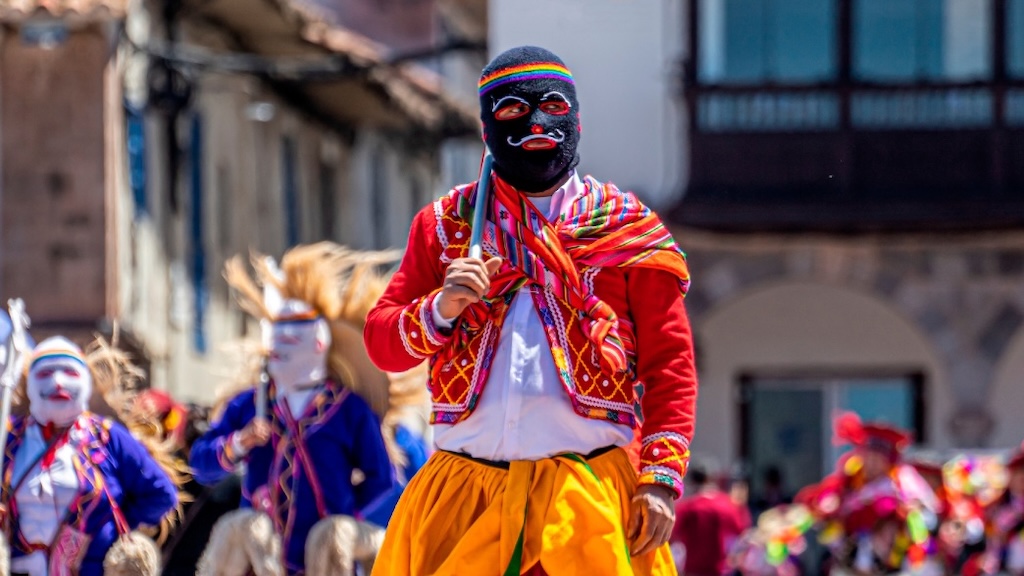
The festival spans several days, featuring colorful processions, traditional dances, and religious ceremonies. Pilgrims, known as pablitos or ukukus, wear vibrant garments and dance in reverence to the Lord of Qoyllur Rit'i. The ukukus, adorned with masks and whips, play a significant role in maintaining order and safeguarding participants.
One of the most spectacular rituals involves pilgrims climbing glaciers to bring down chunks of ice, which they carry back to their villages as a source of blessings and healing. The festival atmosphere is deeply spiritual, with prayer, music, and offerings to the Apu Ausangate.
Ancient Traditions
Qoyllur Rit'i is steeped in traditions passed down through generations. Pilgrims dress in traditional Andean attire, complete with ponchos and flower-decorated hats. The ukukus wear bear masks, symbolizing their intermediary role between nature and humankind.
Food is a significant part of the celebration, with revelers sharing traditional dishes like pachamanca (underground-cooked meat) and chicha (fermented corn beverage). Music, played on instruments like the quena (flute) and charango (small guitar), fills the air, contributing to the festive mood.
What to Expect
The 2025 festival's central day was June 17. The 2026 pilgrimage ran May 30–June 4, with June 2 as its central day; 2027 dates have not been announced. The schedule varies with the religious calendar. Reaching the Sinakara Valley requires a hike through high-altitude terrain, so travelers should prepare for cold weather and physical exertion.
Accommodation within the valley is scarce, and pilgrims typically camp overnight. Warm clothing, good footwear, and food are recommended. For those who cannot make the trek, guided tours can be arranged from Cusco for a more accessible festival experience.
Conclusion
Qoyllur Rit'i Festival is a moving celebration of religion, tradition, and culture that offers a fascinating glimpse into Peru's religious heritage.
The blend of Catholic and local rituals, set against the stunning backdrop of the Andes, creates an unforgettable experience. For anyone seeking to understand the heart of South America's cultural identity, Qoyllur Rit'i is an event that must be witnessed.
Public holidays around the festival
Public and bank holidays in Peru from 3 days before to 3 days after the expected dates ().
- Battle of Arica and Flag DayBatalla de Arica y Día de la Bandera
In 7 months
Editions
- 2027Expected May 2027 · not announced yetExpected
- 2026Past